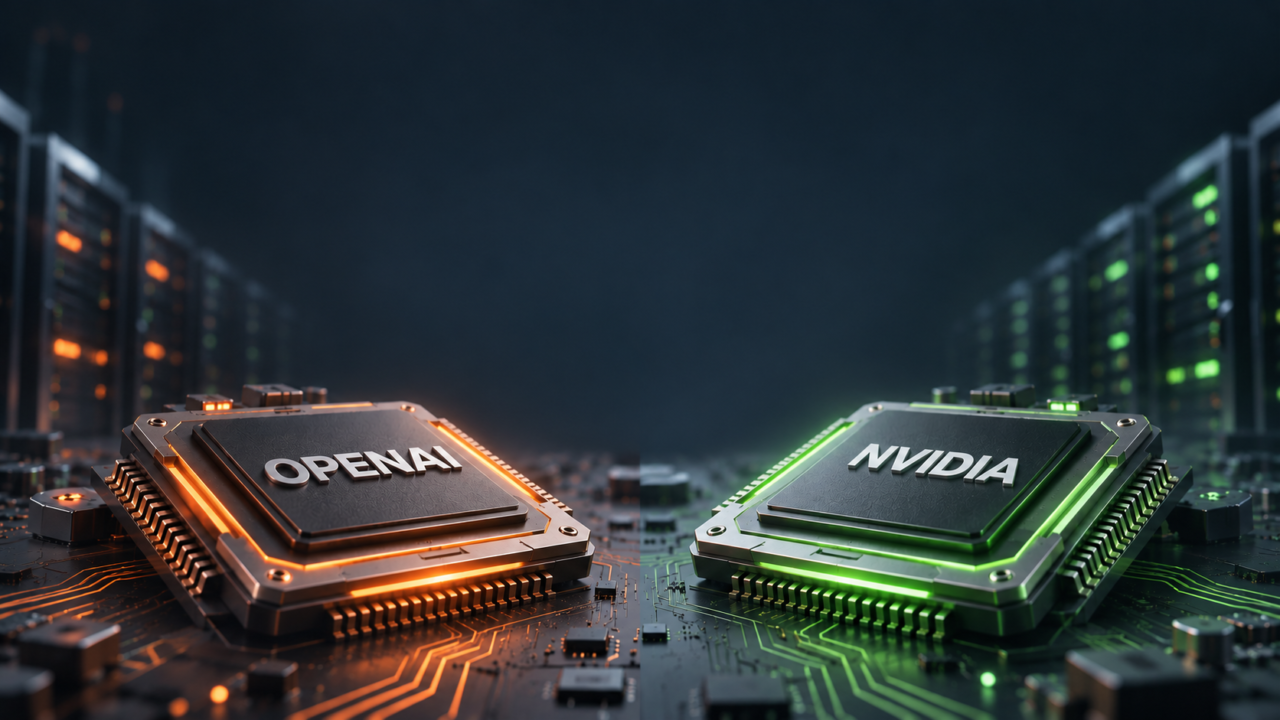
Al-purpose powerhouse that can both train and run AI models, and it is already shipping to cloud companies. Early numbers suggest Jalapeño is extremely good at saving electric Jalapeño vs Nvidia: The Spicy AI Chip Showdown
Every time you ask ChatGPT a question, a huge amount of hardware wakes up somewhere in a data center to answer you. For years, that hardware has mostly come from one company: Nvidia. But in June 2026, OpenAI did something bold. It showed the world its very own AI chip, with a funny name and serious ambitions: Jalapeño.
So how does the OpenAI chip vs Nvidia battle really look today? Is Jalapeño a true Nvidia rival, or just a clever side project? In this guide, I explain both chips in simple words, compare them round by round, and share the honest caveats that most headlines skip. Every technical term is explained right where it first appears, so you can follow along even if you are new to AI hardware.
Jalapeño is a custom chip that OpenAI designed with Broadcom to run its AI models efficiently. Nvidia’s newest platform, Vera Rubin, is a genery while serving answers, but most of those numbers come from OpenAI itself, and the chip is still in the early production stage. Nvidia is not going anywhere soon. OpenAI says it is building a mix of suppliers, not a breakup.
What Is OpenAI’s Jalapeño Chip?
On June 24, 2026, OpenAI and Broadcom unveiled Jalapeño, the first AI chip OpenAI has ever put its name on. CNBC reported that Broadcom will make the chips and OpenAI will use them for inference. That word simply means serving answers: the moment a trained AI model reads your question and writes a reply. The opposite is training, which is the long, expensive process of teaching the model in the first place.
Jalapeño is an ASIC, short for application-specific integrated circuit. Think of it as a chef’s knife made for one job, while a GPU (graphics processing unit, the type of chip Nvidia is famous for) is more like a full kitchen toolkit. The knife is cheaper and sharper for its job, but it cannot do everything. Industry experts quoted by CNBC say ASICs are less flexible than Nvidia’s GPUs but can cost less and be tuned for specific AI tasks.
OpenAI’s own announcement describes the chip as an “Intelligence Processor” built around how large language models (LLMs, the technology behind chatbots) actually run.
Built in Just Nine Months
Here is the part that surprised many engineers. According to CNBC, OpenAI’s president Greg Brockman said the chip was designed from end to end in about nine months, with help from OpenAI’s own AI models. Normally, designing a chip like this takes years. Tom’s Hardware noted that the chip is very large (the size limit of a single silicon exposure, called reticle-sized) and carries six stacks of HBM, which stands for high-bandwidth memory, a super-fast memory placed right next to the processor.
It is part of a much bigger plan. OpenAI and Broadcom have talked about building enough custom chips to need about 10 gigawatts of power, which is roughly the electricity use of millions of homes. CNBC says the first racks of OpenAI-designed chips are due to start rolling out late this year.
Meet Nvidia’s Champion: Vera Rubin
Nvidia has not been sitting still. Its newest platform, Vera Rubin, is the follow-up to the Blackwell generation. In its official announcement, Nvidia says Vera Rubin NVL72 racks are already running at partners such as CoreWeave, Google Cloud, Microsoft Azure and Oracle Cloud. (A rack is a tall cabinet of linked computer hardware, and “NVL72” refers to a rack design that connects 72 GPUs so they behave like one giant chip.)
The headline claim: compared with the older GB200 NVL72, Nvidia says Vera Rubin delivers up to 10 times more tokens per megawatt and one-tenth the cost per million tokens. Let me unpack that:
- A token is a small piece of text, roughly three-quarters of a word, that an AI model reads or writes.
- A megawatt is a unit of electrical power, and it is the real limit for most data centers today.
- So tokens per megawatt tells you how much AI “thinking” you get from each unit of electricity.
CoreWeave, a cloud company, published the first measured results on live Vera Rubin hardware using the DeepSeek R1 reasoning model. And on September 30, HPCwire reported that CoreWeave made Vera Rubin NVL72 available to customers, with Cognition (the company behind the coding agent Devin) as the first customer running real production work on it.
OpenAI Chip vs Nvidia: Head-to-Head Comparison
Here is a simple side-by-side view. The chip details below come mainly from the independent analysis firm SemiAnalysis, which was invited into OpenAI’s labs. Remember that some figures are early and may change.
| Feature | OpenAI Jalapeño | Nvidia Vera Rubin |
|---|---|---|
| Chip type | Custom ASIC for inference | GPU platform for training and inference |
| Designed with | Broadcom (design), TSMC (manufacturing), Celestica (systems) | Nvidia and a huge partner network |
| Memory | HBM4, about 15.4 TB/s per package | HBM4, slightly slower pin speed per SemiAnalysis |
| Power per chip | About 700 watts | About 900 to 1,150 watts per compute die |
| Peak speed per die | 13.4 PFLOPs (MXFP4) | 17.5 PFLOPs (dense NVFP4) |
| Chips linked together | Up to 2,048 | 72 per NVL72 rack |
| Availability | Engineering samples now, volume ramp through 2027 | Shipping to cloud partners now |
| Biggest strength | Efficient serving of AI answers | Flexibility and a giant software ecosystem |
Two quick definitions: PFLOPs means quadrillions of math operations per second (a raw speed score), and TB/s is terabytes per second (how fast data can move in and out of memory).
What jumps out? Jalapeño has a bit lower raw peak speed than a Rubin compute die, but it uses much less power. That is exactly the trade-off an efficiency-focused chip should make.
Round 1: Power Efficiency
If you remember one thing from this article, remember this: electricity is now the biggest bottleneck in AI. SemiAnalysis points out that OpenAI is limited by data center power, not by money or floor space. Nvidia’s CEO Jensen Huang made a similar point at Computex 2026, saying that with a fixed amount of power, how much work you get per watt effectively becomes your revenue.
On this round, Jalapeño looks impressive. A summary of OpenAI’s own August benchmarks says the chip delivered 1.5 to 1.9 times more work per watt than a comparison Nvidia GB200 system. SemiAnalysis went further and wrote that Jalapeño’s output per megawatt even beat Nvidia’s Vera Rubin figures published in July, though it called the Rubin comparison the fairer one and noted both chips are still immature and will keep improving.
Round 2: Speed and Responsiveness
Speed for AI users is about latency (how long you wait) and tokens per second per user (how fast text appears on your screen). In the SemiAnalysis review, Jalapeño hit more than 700 tokens per second for a single user on the DeepSeek R1 model, and around 1,400 tokens per second on OpenAI’s open model GPT-OSS. For comparison, a fast human reader processes only a handful of tokens per second.
Those results used simpler settings, without a trick called speculative decoding. That is a method where a small helper model guesses upcoming words and the big model checks them, which can cut costs a lot. So there may be even more speed available later.
Round 3: Cost
Cost is where things get tricky. Broadcom’s CEO has claimed early tests show roughly 50% lower cost versus standard AI GPUs, but reports note that these specs and benchmarks are unverified. SemiAnalysis found that, on output tokens per dollar, Vera Rubin and Jalapeño are almost neck and neck, although Rubin’s numbers include speculative decoding while Jalapeño’s do not.
Part of Jalapeño’s savings comes from simple business math: OpenAI trades Nvidia’s high profit margins for Broadcom’s lower ones. But SemiAnalysis also reminds readers that Meta’s and Microsoft’s chip programs have struggled to take off even with years of effort. Cheap chips alone do not guarantee success.
Round 4: Software and the “CUDA Moat”
CUDA is Nvidia’s software platform that developers use to program its GPUs. Over nearly two decades it has become a huge advantage, often called the CUDA moat, because switching to another chip usually means rewriting a lot of code.
OpenAI is attacking that moat in a clever way. SemiAnalysis says Jalapeño’s software was brought up very quickly because OpenAI’s own AI coding tools (Codex) helped write the low-level programs, called kernels, that run on the chip. The firm even argued the CUDA moat may be weaker than people think. That is an analyst’s opinion, not a settled fact, and Nvidia’s ecosystem of tools, partners and developers remains enormous.
Round 5: Availability
This round goes clearly to Nvidia. Vera Rubin is already running at several clouds and in production for at least one customer. Jalapeño, meanwhile, is mostly in engineering samples. SemiAnalysis says production is scheduled to ramp gradually through 2027, with most output expected near the end of next year, and the next big goal is a 100-megawatt deployment. A tape-out (the moment a chip design is finalized and sent for manufacturing) happened for Jalapeño in November 2025, so the chip is young.
Fair Warning: What the Headlines Don’t Tell You
Before you share a “Jalapeño beats Nvidia” post, keep these honest limits in mind:
- Most numbers come from OpenAI. SemiAnalysis verified the tests in person in OpenAI’s lab, but it did not run its full benchmark suite and the figures were provided by OpenAI.
- The first comparison used older Nvidia hardware. Many headlines compared Jalapeño with Blackwell. SemiAnalysis itself said the fairer opponent is Rubin, which is newer.
- Tests were fairly simple. The results used short, single-turn workloads. Real-life agent tasks with long conversations stress hardware much harder, and those results are not out yet.
- The model list was limited. Tests covered a few open models, not the very newest giant ones.
Is OpenAI Breaking Up With Nvidia?
Not really. It is more like OpenAI is building a team of suppliers. In 2025, Nvidia and OpenAI announced a huge partnership in which Nvidia would invest up to $100 billion as 10 gigawatts of AI data centers come online. Nvidia later reminded investors that an announcement is not the same as a final contract. OpenAI also has a deal with AMD.
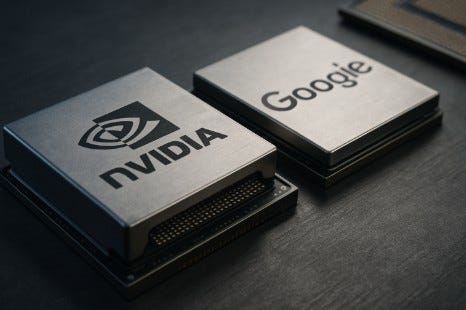
And just this month, TechRadar reported (citing The Information) that OpenAI plans to buy Google’s TPUs, which are Google’s own AI chips. The terms and quantities have not been disclosed. TechRadar adds that OpenAI is already one of Nvidia’s major customers and now has several sources of computing power: Nvidia, its own Jalapeño, and reportedly Google.
The money involved is gigantic. The same report says Alphabet, Amazon and Microsoft together could spend as much as $600 billion on AI infrastructure in 2026. With that much at stake, no big AI lab wants to depend on a single supplier.
What It Means for You
- For everyday ChatGPT users: if Jalapeño works as promised, answers could get faster and cheaper to produce over time. You will not notice the chip itself, only the experience.
- For businesses and developers: more competition among AI chips can eventually push prices down and improve availability of AI services.
- For investors and tech fans: watch whether production really ramps in 2027, and whether independent tests on long, agent-style workloads confirm OpenAI’s claims. This is general information, not financial advice.
- For the planet: more work per watt means less electricity wasted per answer, which matters as data centers grow.
Frequently Asked Questions
What is the OpenAI Jalapeño chip? It is OpenAI’s first custom AI chip, co-designed with Broadcom and built for inference, meaning running trained AI models and serving answers.
Is Jalapeño better than Nvidia chips? In early tests it looks very strong on power efficiency and speed for serving models, but those tests are early, mostly from OpenAI, and Nvidia’s Vera Rubin is a tough, newer rival that is already shipping.
Can Jalapeño replace Nvidia GPUs completely? Unlikely in the near term. Jalapeño is built for inference, while Nvidia GPUs handle both training and inference and have a vast software ecosystem.
When will Jalapeño be available? OpenAI plans to start deploying it before the end of 2026, with larger-volume production expected to ramp through 2027.
Who manufactures Jalapeño? Broadcom leads development and delivery, with TSMC reported as the chip manufacturer and Celestica as a systems partner.
Final Verdict
Jalapeño is not an “Nvidia killer,” and it does not need to be. It is a sharp, efficient tool that could save OpenAI a lot of electricity and money, and it proves that a new chip team can move astonishingly fast with AI’s help. Nvidia, meanwhile, still leads on flexibility, software and real-world availability. The smartest way to read this story is as the start of a multi-chip era, where the biggest AI companies mix GPUs, custom ASICs and rival chips to get the most intelligence from every watt.
The real winner? Probably anyone who uses AI. More competition usually means faster, cheaper and greener technology.
Sources
- CNBC
- OpenAI
- Tom’s Hardware
- SemiAnalysis
- NVIDIA Blog
- CoreWeave
- HPCwire
- TechRadar
- RCR Tech
- AI News
- Newsio