OpenAI has turned the tables in its legal fight with Apple. On Friday, November 27, the ChatGPT maker filed counterclaims in a California federal court, accusing Apple of stealing OpenAI’s trade secrets and pressuring hardware suppliers that work with both companies. The OpenAI Apple lawsuit now reaches beyond employee poaching into a harder question: who controls the factories that make the next generation of AI devices?
These are allegations from one side. No judge has ruled on them, and Apple rejects them.
How the OpenAI–Apple lawsuit began
Apple struck first. In July 2026, it sued OpenAI, OpenAI’s hardware unit io Products, and two former Apple engineers, Tang Tan and Chang Liu. Apple says confidential engineering and hardware-development information was taken to help OpenAI’s consumer device plans. Tan is now OpenAI’s chief hardware officer, and he once led iPhone and Apple Watch product design at Apple.
OpenAI denied the claims and called the suit an attempt to stop it from hiring Apple staff. In October, the judge in the case, Edward Davila, signaled he was likely to grant Apple’s request for a preliminary injunction, a court order that pauses certain conduct while a case continues. OpenAI then agreed not to use the information Apple says was taken, and to forensically image the devices of 14 employees.
What OpenAI is now claiming
OpenAI says Apple used its “size and wealth to forestall competition,” and accuses it of trying to “compete unfairly by any means available.”
The counterclaims make two main points:
- Trade secrets. OpenAI says Apple got its confidential information through a former OpenAI employee. That person returned to Apple after about six months at OpenAI. OpenAI claims he sent more than 100 files about an unreleased device to personal accounts. The files reportedly include a supplier inspection procedure, color and finishing data, and scans of an unreleased device. OpenAI sent Apple a cease-and-desist letter on October 9.
- Supplier pressure. OpenAI says Apple staff asked shared suppliers to identify their OpenAI projects and the workers on them with Apple experience. It also says Apple asked suppliers to keep those workers off Apple jobs.
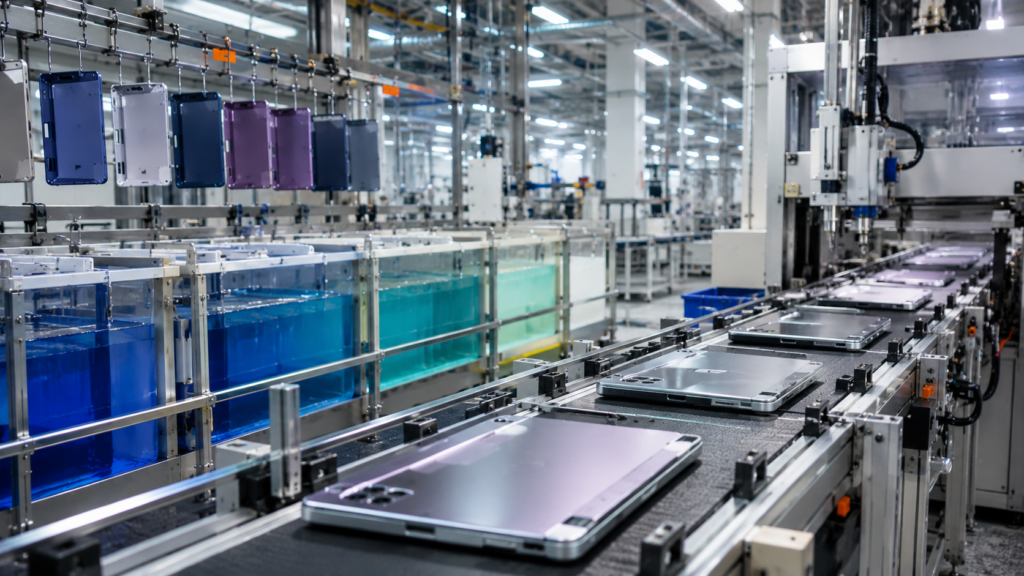
Court documents describe one example. A specialist finishing supplier, which uses an anodizing line (a chemical treatment for metal parts), allegedly moved OpenAI’s work to an overnight shift after Apple objected to both companies’ parts being processed in the same tanks. OpenAI says this raised its costs. It also says one manufacturer told it a planned job was off because of Apple’s threats.
OpenAI’s filing does not name the suppliers involved. Some outlets say Apple’s own July complaint names Foxconn, Luxshare and Goertek as suppliers that work with both companies, but nothing in OpenAI’s filing ties any of them to these claims.
Beyond the headline claims, OpenAI says about 400 people have left Apple to join it. Tan and Liu also filed counterclaims. Tan wants parts of Apple’s employee confidentiality agreement declared void, citing California’s limits on non-compete terms. Liu alleges Apple invaded his privacy by imaging his returned laptop.
Apple’s response
Apple called the counterclaims “a transparent attempt to distract from the substance of Apple’s lawsuit.” It adds that OpenAI has already been ordered to stop using Apple’s confidential information. That wording is worth checking: reports say the October outcome was an agreement between the parties that ended the injunction request, not a ruling on the merits. Apple also denies using the rehired employee to reach OpenAI’s confidential information.
OpenAI says it has “no interest” in rivals’ trade secrets.
Where the case stands
- OpenAI withdrew its earlier motion to dismiss and formally answered Apple’s complaint.
- Apple has asked for a preliminary injunction and won broader access to evidence in discovery, the stage where each side must hand over documents.
- Apple has not yet answered the counterclaims in detail.
- The court must decide how the counterclaims fit with Apple’s case. Trial is currently set for July 19, 2027.
Why this fight matters for AI hardware
Software companies can ship updates in an afternoon. Hardware depends on a small group of factories with the skills and capacity to build millions of precise devices. Apple is a giant customer for those factories. If OpenAI’s claims hold up, they suggest that a rival’s buying power can quietly shut a newcomer out.
That is why the case matters beyond these two companies. OpenAI says its AI-enabled personal devices could “outcompete Apple on what Apple views as its own turf,” and the supplier fight is about whether a challenger can even get its products built. It also tests how far a company can go in protecting its secrets when employees move to a competitor, especially in California, where non-compete rules are tight.
For now, nothing has been proven. What the court decides on the supplier claims will say a lot about how open the AI hardware race really is.
Sources
- OpenAI countersues Apple, alleging trade secret theft and supplier threats (9to5Mac)
- OpenAI countersues Apple, says 400 workers left iPhone maker to join it (Inquisitr, citing CBS News)
- OpenAI Sues Apple Over Stolen Secrets and Supplier Pressure (Trending Topics)
- OpenAI Countersues Apple Over Suppliers and Device Plans (iThinkDifferent)
- OpenAI countersues Apple, alleging theft of trade secrets (Pasquale Pillitteri)
- OpenAI countersues Apple over device secrets, suppliers (AI Stock Wire)
- OpenAI countersues Apple as fight over AI hardware suppliers escalates (Cryptopolitan)
- OpenAI Countersues Apple: 2 Claims, 0 Court Findings (Shattered)
- OpenAI Countersues Apple: The Real Fight Is Over Who Holds the Data (DEV Community)