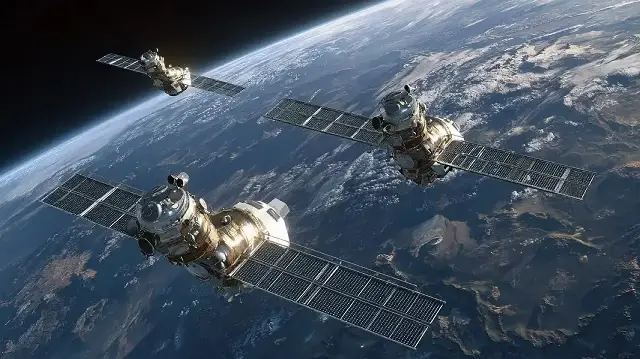
Every army needs a good phone signal. That sounds like a joke, but it’s close to the truth. Modern war runs on data: drone video, target coordinates, orders, maps. If the signal drops, the army goes partly blind.
That is why Kyiv’s latest warning matters. Ukrainian intelligence says Russia is building its own version of Starlink and doing it faster than expected. In a Moscow Times report on the Reuters story, Ukrainian intelligence officer Vadym Skibitskyi said the launches are moving much faster than originally planned.
Let’s break down what is happening, what is still unproven, and why it matters. No rocket-science degree required.
What Is Starlink, and Why Does the War Need It?
Starlink is a satellite internet service run by SpaceX, Elon Musk’s space company. Instead of a few big satellites far away, it uses thousands of small ones in low Earth orbit (a lane of space only a few hundred kilometres above the ground). Because they are close, the internet is fast and the delay is short.
Ukraine has leaned on Starlink since the full-scale invasion began in 2022. Soldiers use it to talk, fly drones and coordinate attacks, even where cell towers were destroyed. The Kyiv Independent reported that Kyiv received more than 50,000 terminals, with Poland supplying nearly 30,000 of them.
Starlink does not officially work over Russia. Russian troops, however, were using black-market terminals, meaning unauthorized and often smuggled units.
The Day Russia Lost Its Cheat Code
In early 2026, that changed. Ukraine introduced a “whitelist,” an approved list of terminals that can work. Kyiv Post reported that SpaceX then switched off hundreds of grey- and black-market terminals used by Russian forces, at Ukraine’s request. Ukrainian forces were not affected.
The effect was big. A Moscow Times piece noted that this was one of several factors that shifted battlefield momentum toward Ukraine. Analysts quoted there said Russian infantry was left in an “information bubble,” unable to see the wider picture. Losing a trick you were quietly using is annoying. Losing it in a war is a disaster.
Enter Rassvet: Russia’s “Starlink at Home”
Russia’s answer is a satellite network called Rassvet (the Russian word for “dawn”), built by a company called Bureau 1440. It has been in development since before the full-scale invasion, but Starlink’s cutoff gave it new urgency, as UNN explains.
The timeline so far:
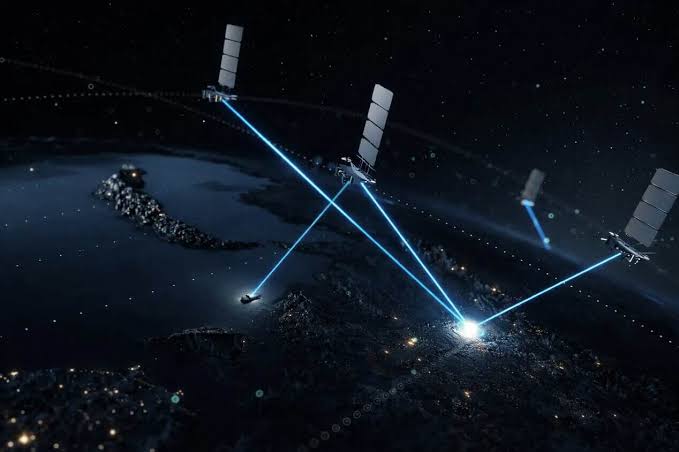
- May 2024: Russia launched three test satellites, called Rassvet-2, to try out laser links between satellites, according to Dev.ua.
- March 23, 2026: The first 16 production satellites went up after manufacturing delays, per Euromaidan Press.
- July 2026: A second batch of 16 followed.
- August 10, 2026: Skibitskyi, deputy head of Ukraine’s military intelligence service (known as GUR), said the rollout was ahead of schedule, as the Kyiv Independent reported.
The Big Numbers
According to a Benzinga summary of the Reuters report, Russia plans 292 satellites by 2027 and 924 by 2035. Russia says commercial service will start in 2027, and Ukrainian officials warn the military uses could follow.
For comparison, Starlink already has thousands of satellites. Rassvet is small. Experts quoted by Euromaidan Press say stable service needs around 200 to 250 satellites, and Ukrainian defense adviser Serhii Beskrestnov says systematic military use needs several hundred, as Korabelov reported.
So Is Russia Already Using It?
In a limited way, according to Kyiv. Ukrainian intelligence sources cited by Kyiv Post say Russia used its first batch to communicate over Ukraine for several hours. Satellite expert Volodymyr Stepanets told Militarnyi that the satellites now offer at least two windows of more than an hour each per day over Ukraine, as Intellinews reported.
That is a big step up from May, when Beskrestnov said each satellite passed over Ukraine about once a day and gave only six to ten minutes of connection, per Euromaidan Press.
Think of it like a bus that only comes twice a day. Useful for some jobs, but you wouldn’t run a taxi business on it. With only a handful of “buses,” Russia can’t yet offer steady coverage for live drone control.
The Reality Check: Rassvet Has Problems
Before anyone panics, the project is far from smooth.
- Lost satellites. Defense Express, via TechRadar, reported that one satellite from the first batch was lost and two others faced a possible fall back to Earth.
- More falling satellites. UNN reported that satellites No. 17 and No. 23 from the second batch failed to reach their working orbit and were forecast to burn up in the atmosphere around October 29 and November 1. Those dates were preliminary.
- Not ready yet. Ukraine’s intelligence chief, Oleh Ivashchenko, said the current constellation can’t deliver reliable service over the areas Russia wants to cover, per TechRadar.
- Some claims can’t be checked. Kyiv Post said it could not independently verify certain figures in its report.
Even so, UNN reports that Russia has pushed ahead, and a November 5 Militarnyi headline says Moscow is planning a next-generation phase called Rassvet-4 with 374 satellites. Plans on paper are easy, though. Making them work in orbit is the hard part.
Why Kyiv Is Worried
Mostly because of drones. A drone needs a link to its operator. Satellite links let a drone fly far deeper than normal radio can reach. An analysis cited by PRM.ua warned that Rassvet could add risks in real-time drone control. The Komersant analysis adds that the network matters for military use, not just for selling internet to farmers.
Another worry is dependence. Russia would no longer need a US-owned network that can be switched off. Whoever owns the “off switch” has real power in a war, as Ukraine knows from its own use of Starlink.
And What Is Ukraine Doing About It?
Ukraine has said it is working on a plan of its own. President Volodymyr Zelensky said on October 4 that Kyiv is developing a Starlink-like system, partly because Starlink is owned by a private company that sets limits on how the military can use it, as Euromaidan Press and Cybernews reported. Cybernews notes one big hurdle: Ukraine has no heavy-lift rocket of its own and would need partners to launch satellites. Reports also say Kyiv is discussing ways to counter Rassvet, as Advanced Television summarized.
The Bottom Line
Russia’s Starlink clone is real, small, glitchy and moving faster than Kyiv expected. It is not yet a game-changer, since a few dozen satellites can’t match a constellation of thousands. But the direction is clear. In this war, the fight over the sky is no longer only about planes and missiles. It is about who controls the signal.
Sources
The Moscow Times ·
· Kyiv Independent (Roscosmos)
· Kyiv Post · Euromaidan Press
· UNN