Jio Platforms IPO 2026: Everything You Need to Know About India’s Biggest Share Sale
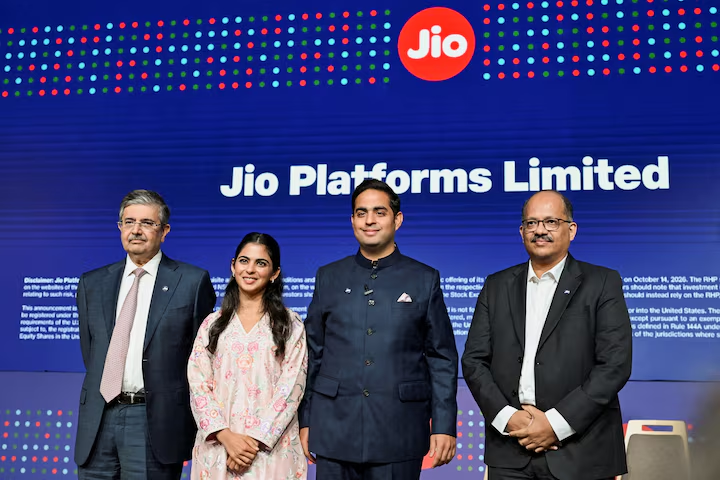
India’s largest-ever IPO (initial public offering, the first time a private company sells its shares to the general public) is open for bidding this week. Jio Platforms, the digital arm of Reliance Industries, is offering shares to the public for the first time. This guide covers the dates, the price, the minimum amount you need, and what the company plans to do with the money.
Jio Platforms IPO at a glance
These details come from Chittorgarh’s IPO page. Amounts are in Indian rupees. One lakh is 100,000 and one crore is 10 million.
| Detail | Information |
|---|---|
| Opens | October 21, 2026 |
| Closes | October 23, 2026 |
| Total size | About ₹30,213 crore |
| Price band (the range within which you can place your bid) | ₹1,065 to ₹1,119 per share |
| Lot size (the smallest bundle of shares you can apply for) | 12 shares |
| Minimum investment | ₹13,428 |
| Allotment (the decision on who gets shares when more people apply than there are shares) | October 26, 2026 |
| Shares reach your account | October 27, 2026 |
| Listing (the day shares start trading on the stock exchange), expected | October 28, 2026 on NSE and BSE (India’s two main stock exchanges) |
Why this IPO is a record
According to Reuters, selling at the top of the price range would raise about $3.2 billion. That beats the previous Indian record of $2.9 billion, set by Hyundai Motor India in 2024.
Demand has been huge from day one
Business Standard reported that the whole issue was fully subscribed (investors had bid for at least all the shares on offer) within 100 minutes of opening at 9 am. By the end of day one, bids were more than 3 times the shares available. Upstox notes that no other mega IPO has been fully subscribed on its first day.
On day two, HDFC Sky’s data showed the issue at 4.38 times subscribed by 3 pm. In other words, if a company offers 100 shares and investors bid for 438, the issue is 4.38 times subscribed. Big institutions were at roughly 10 times their share, while retail investors (everyday people applying for up to ₹2 lakh) were at about 1.4 times. These numbers change by the hour, so check the final figure after the issue closes on October 23.
What kind of IPO is it?
It is a fresh issue (the company creates new shares and keeps the money) of 27 crore shares. Existing investors are not selling any of their holdings, which would have made it an offer for sale (where existing owners sell their shares and they keep the money). So all the money goes to the company.
Where will the money go?
The company’s final offer document, called the RHP, on SEBI’s site says about ₹27,500 crore will be used to repay loans of its subsidiary, Reliance Jio Infocomm. (SEBI is India’s stock market regulator.) The remainder goes to general business needs.
Who gets how much of the IPO?
Per Chittorgarh’s breakdown, the shares offered to the public are split like this:
- QIBs (qualified institutional buyers, such as mutual funds, insurers and big foreign funds): 50%.
- NIIs (non-institutional investors, meaning individuals applying for more than ₹2 lakh): 15%.
- Retail investors (everyday people applying for up to ₹2 lakh): 35%.
There are also two special quotas:
- Employees: eligible Jio staff get a ₹54 per share discount.
- Reliance shareholders: eligible holders of Reliance Industries shares have a reserved portion, which NewsBytes puts at up to ₹2,500 crore.
A retail investor can apply for at least 1 lot (₹13,428) and at most 14 lots (168 shares, about ₹1.88 lakh).
Who are the anchor investors?
One day before the IPO opens, large institutions are invited to bid first. They are called anchor investors, and their interest tends to reassure everyone else.
Chittorgarh’s data shows Jio raised about ₹8,110 crore this way: roughly 48% from foreign funds, 34% from mutual funds and 11% from insurers. Upstox lists LIC, BlackRock and Fidelity among the names.
Anchor investors can’t sell right away because of a lock-in (a period during which shares cannot be sold). Half of their shares are locked until November 25, 2026, and the rest until January 24, 2027.
How is Jio doing financially?
These numbers come from the company’s filings, as shown on Chittorgarh:
- Total income, FY2025-26 (the financial year ending March 2026): about ₹1.5 lakh crore, up roughly 16% on the year before.
- PAT (profit after tax, the profit left once tax is paid): about ₹30,053 crore, up about 15%.
- EBITDA (earnings before interest, tax and wear-and-tear costs, a quick way to judge how well the core business earns): about ₹76,255 crore.
- Profit in April–June 2026: ₹7,764 crore.
- Borrowings (June 30, 2026): about ₹61,372 crore.
The technology and AI angle
Jio is no longer just a phone network. According to the company profile on Chittorgarh:
- It had 533.3 million customers as of June 30, 2026.
- Its wireless broadband reaches over 99% of India’s population.
- It has built its own 5G technology stack (the set of software and systems that run a 5G network) and an in-house AI platform called JioBrain.
- It has filed 7,220 patent applications, and 1,043 have been granted. (A patent is a legal right over a new invention that stops others from copying it.)
What about Meta and Google?
Both invested in Jio in 2020. Reuters, via DealStreetAsia, reports that Meta holds about 9.99% and Google about 7.73%. These percentages are their stakes (the share of the company they own).
Early reports said these investors would sell a slice in the IPO. But Reuters reported in May that the plan changed because investors preferred to stay in for the long term. So Meta is not selling. Because new shares are being created, its percentage will shrink slightly, and Reliance’s stake will drop from about 66.43% to about 64.48%.
How to apply
- Log in to your broker app (Zerodha, Groww, Upstox, etc.) or your bank’s net banking. You will need a demat account, a digital account that holds your shares much like a bank account holds money.
- Open the IPO section and pick Jio Platforms.
- Enter your UPI ID (UPI is India’s instant payment system), the quantity and the price.
- Approve the request in your UPI app.
- On October 26, check your allotment status on the KFin Technologies portal. KFin is the registrar, the company that handles the share allotment records.
Things to think about before applying
- Rich valuation: at the offer price, Chittorgarh puts the P/E (price-to-earnings ratio, which shows how many times a year’s profit investors are paying for the company) at about 33. The company’s market value (the total worth of all its shares) comes to near ₹10.3 lakh crore.
- Heavy debt: though much of this IPO is meant to bring it down.
- Tough competition: Bharti Airtel and Vodafone Idea are strong rivals in telecom.
- No guaranteed allotment: with demand this high, not every applicant will get shares.
This article is for information only and is not investment advice. Read the official RHP and consider speaking to a SEBI-registered advisor before investing.
Frequently asked questions
When does the Jio Platforms IPO open and close?
It opened on October 21, 2026 and closes on October 23, 2026.
What is the minimum investment?
₹13,428 at the top of the price band, for one lot of 12 shares.
When will the shares list?
The expected date is October 28, 2026, on NSE and BSE.
Is Meta selling its shares in this IPO?
No. It is a fresh issue only, and existing investors are not selling.
Who gets the IPO money?
The company. Most of it will repay loans of Reliance Jio Infocomm.
Conclusion
The Jio Platforms IPO stands out for its size, its record-fast demand and its technology story. Before you bid, look closely at the price, the company’s debt and how much risk you are comfortable with. Once the issue closes and the shares list, it’s worth updating this post with the final subscription numbers and listing price.
Sources: