Google’s Gemini 4 is not a single standalone model. It is the newest generation of Google DeepMind’s Gemini family, built around multimodal reasoning, long-context processing and increasingly autonomous “agentic” work. The first broadly available flagship in that generation is Gemini 4 Argon, released globally on October 13, 2026. Gemini 4 Carbon, announced on October 28, is a newer and more capable frontier model focused especially on long-running engineering, coding and cybersecurity tasks, but as of November 8, 2026 it is still in restricted pre-release testing rather than general public availability.
The most important change from Gemini 3-era models is not simply “more intelligence.” Google is pushing Gemini toward AI systems that can remain on a difficult problem for much longer, operate tools, navigate software environments, analyze very large multimodal inputs and complete multi-step workflows with less supervision. Argon already delivers major gains in enterprise knowledge work and long-context reasoning; Carbon pushes further into sustained agentic execution and cybersecurity.
Argon is officially described as a large-scale sparse mixture-of-experts transformer, while Carbon’s detailed architecture has not yet been published in an official model card. citeturn499543search5turn798794search4
What Gemini 4, Argon and Carbon actually are
Gemini 4 is the umbrella generation. Google DeepMind describes it as its next era of frontier intelligence and currently presents Argon and Carbon as members of that generation. In other words, searching for “Gemini 4 vs Argon” is slightly misleading: Argon is a Gemini 4 model.
Gemini 4 Argon is the production-ready flagship. It became generally available on October 13 through Google AI Studio, the Gemini API, Google Cloud, Gemini Enterprise, Search, the Gemini app and Google’s Antigravity agent-development environment. Google positions it for software engineering, finance, legal work, science, cybersecurity and other complex professional workflows.
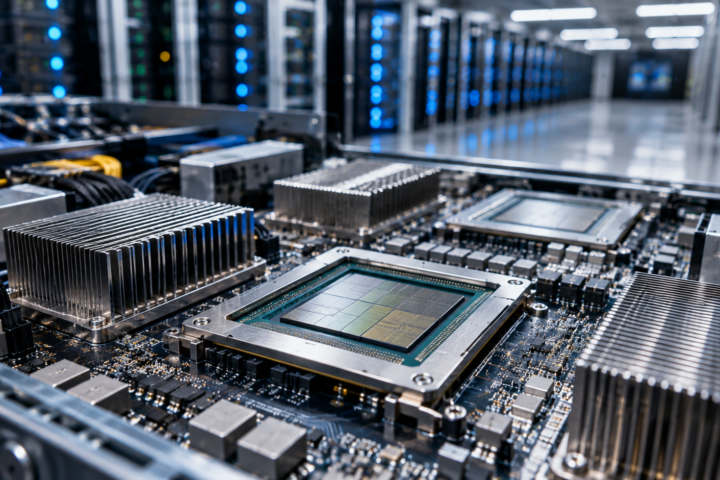
Argon is natively multimodal, accepting text, images, audio and video, and supports a combined input/output context window of up to 1 million tokens. Its model card describes it as a large-scale sparse mixture-of-experts, or MoE, transformer. In an MoE system, only selected specialist portions of the network need to activate for a given token, which can make extremely large models more computationally practical than activating every parameter for every request.
Gemini 4 Carbon is now official—not a rumor. That distinction matters because early October reporting treated Carbon as an internal checkpoint or codename. Google formally announced it on October 28, 2026, calling it its strongest model at the time and emphasizing cybersecurity and long-horizon engineering.
Carbon, however, is not yet generally available. Google is initially providing it to selected cyber defenders and trusted partners through the Fairwind Program while conducting additional safety testing, including participation in a U.S. government pre-release testing process. Google says broader access for developers, businesses and consumers is planned, but it has not provided a firm general-availability date.
Architecture, power and benchmark performance
Argon represents a substantial shift toward agentic AI—models that do more than answer one prompt and stop. Google designed it for multi-stage investigations, coding across large repositories, computer interaction, scientific reasoning and workflows requiring repeated tool use. Google’s model card reports a 1M-token context window and strong performance across knowledge work, coding, long-context reasoning, computer use and multimodal understanding.
On Google’s published October evaluations, Argon scored 68.9% on the Vals Index, 51.3% on AutomationBench, 77.9% on DeepSWE v1.1, and 84.2% on GraphWalks for 256K-to-1M-token long-context tasks. Benchmark results vary substantially by harness and methodology, however, and Argon does not lead every coding test; for example, Google’s own table shows competing frontier models ahead on FrontierSWE 2 and Terminal-Bench 4.0.
Carbon improves on Argon across several of Google’s newer evaluations. Google reports an Artificial Analysis Intelligence Index v5.0 score of 59 versus Argon’s 50, Terminal-Bench 4.0 performance of 65.2% versus 57.1%, and GraphWalks long-context performance of 96.2% versus 84.2% in the 256K-to-1M range.
Cybersecurity is Carbon’s clearest specialization. Google reports 88.2% on SEC-bench Pro for vulnerability discovery, 54.8% on ExploitGym and 71.0% on CWE-bench for remediation. Google also says its internal secure-code success rate is more than twice Argon’s, although that particular figure is an internal company measurement rather than an independently reproduced benchmark.
Carbon is also designed for unusually long autonomous work. Google says internal versions have operated for days while investigating difficult engineering problems, recovering from dead ends and working through large codebases. That does not mean every public Carbon session will run autonomously for days; it describes internal testing of sustained agentic workflows.
| Model | Status on Nov. 8, 2026 | Architecture / context | Selected performance | Primary target |
|---|---|---|---|---|
| Gemini 3.1 Pro | Earlier-generation model | Multimodal; up to 1M context | HLE 44.4%; SWE-Bench Verified 80.6% | Reasoning, coding, multimodal analysis |
| Gemini 4 Argon | Generally available | Sparse MoE transformer; up to 1M combined context | Vals 68.9%; DeepSWE 77.9%; GraphWalks 256K–1M 84.2% | Complex coding, enterprise work, science, agents |
| Gemini 4 Carbon | Restricted pre-release | Detailed architecture not yet publicly documented | AA Index 59; SEC-bench Pro 88.2%; GraphWalks 96.2% | Long-horizon engineering and cybersecurity |
| Gemini 4 | Model family, not a separate SKU | Encompasses Argon, Carbon and future Gemini 4 variants | Depends on model | Google’s frontier AI generation |
Gemini 3.1 Pro figures come from its February 2026 model card; its benchmark suite is older, so the numbers should not be treated as direct apples-to-apples comparisons with Carbon’s later benchmark versions.
How Gemini 4 improves on previous Gemini models
Gemini 3.1 Pro already supported a million-token context window, multimodal input and strong reasoning, so Gemini 4’s progress is more about reliability over long workflows than merely extending context length. Google says Argon is a new frontier model rather than a fine-tune or modification of an earlier Gemini model.
Enterprise work is one area where Google reports a measurable step forward. External tester Vals said Argon produced a 14% improvement in accuracy compared with Gemini 3.1 Pro on enterprise knowledge-work evaluations. Google also emphasizes more capable computer interaction, deeper visual reasoning and stronger agentic coding.
Carbon then improves the agentic layer further. On Google’s published evaluation table, Carbon rises from Argon’s 51.3% to 53.9% on AutomationBench, from 55.0% to 61.2% on FrontierSWE 2, and from 69.0% to 77.4% on Agents’ Last Exam v1.1.
Google also reports safety-behavior improvements. Carbon reduced successful cheating to zero in its Terminal-Bench 4.0 evaluation, achieved 0% attack success on the tested Gray Swan indirect-prompt-injection benchmark, and produced roughly half as many unsupported claims as Argon in Google’s internal tests. These are encouraging results, but several come from Google’s own internal evaluation pipeline and need independent validation at scale.
Real-world use cases and developer ecosystem
For developers, Gemini 4 Argon is already usable through the Gemini API and Google AI Studio, while enterprises can deploy it through Google Cloud and Gemini Enterprise. Google Cloud lists gemini-4-argon as generally available with support for enterprise controls including data residency, customer-managed encryption keys and VPC Service Controls in supported deployment configurations.
Its strongest near-term use cases include autonomous software maintenance, repository-scale code analysis, financial-document synthesis, legal research, scientific reasoning, multimodal document analysis and complex business automation. Google says the Chrome team used Argon to help separate browser functionality from a roughly six-million-line legacy folder inside Chromium’s much larger codebase, illustrating the kind of repository-scale engineering task the model targets.
Carbon could be particularly important for AI cybersecurity, automated vulnerability discovery, secure code generation, penetration-testing assistance and patch generation. Its combination of vulnerability detection, exploit validation and remediation suggests a future in which defensive security teams use frontier models throughout the software-security lifecycle rather than only as coding assistants.
Pricing also matters. Argon currently costs $2 per million input tokens and $10 per million output tokens through November 30, 2026, with prices scheduled to rise to $4 and $20 respectively on December 1. Google has said Carbon will launch with the same introductory $2/$10 pricing, although Carbon is not yet broadly purchasable.
Limitations, risks and future scope
Neither Argon nor Carbon should be treated as infallible autonomous workers. Google explicitly lists hallucination as a continuing limitation for Argon and notes that users may encounter occasional latency or timeout problems. Argon’s built-in knowledge cutoff is March 2026, meaning current information can still require retrieval or Search ground.
Another limitation is transparency around scale. Google has not disclosed parameter counts, training-compute figures, exact active-expert counts or the number and type of TPUs used to train Argon or Carbon in the public materials reviewed here. Carbon also lacks a published model card on Google DeepMind’s model-card index as of November 8, making detailed claims about its architecture premature.
The future direction is clearer than the underlying hardware details. Gemini is moving from “chatbot intelligence” toward persistent AI agents capable of handling software projects, research, enterprise processes and security workflows over much longer horizons. Carbon’s emphasis on operating through dead ends, monitoring its own execution and completing complex plans points toward agents that behave more like digital project collaborators than one-shot assistants.
If Google can maintain those gains while reducing hallucination, prompt-injection risk and operating cost, Gemini 4 could become especially important in enterprise automation, AI coding agents, cybersecurity, scientific discovery and robotics. That is an inference from Google’s current product direction rather than a confirmed roadmap.
FAQs
Is Gemini 4 officially released?
Yes, Gemini 4 is an official Google model generation. Gemini 4 Argon is generally available, while Carbon was officially announced on October 28 but remains in restricted pre-release testing as of November 8, 2026.
Is Gemini Carbon just a rumor or codename?
It was initially discussed as an internal model name, but it is no longer merely a rumor: Google officially announced Gemini 4 Carbon under that name.
Is Gemini 4 Carbon better than Argon?
On Google’s current benchmark table, Carbon beats Argon on most highlighted long-context, coding, agentic and cybersecurity evaluations, although independent real-world testing remains important.
How powerful is Gemini 4?
Argon supports up to a 1M-token context window and uses a sparse MoE transformer architecture, but Google has not published parameter counts or total training compute. Carbon’s detailed architecture remains undisclosed.
What is Gemini 4 best for?
Argon is aimed at complex software engineering, enterprise knowledge work, science, finance, legal workflows and agentic automation. Carbon extends that focus toward longer engineering tasks and advanced cybersecurity defense.
Key source links
Google DeepMind Gemini models,