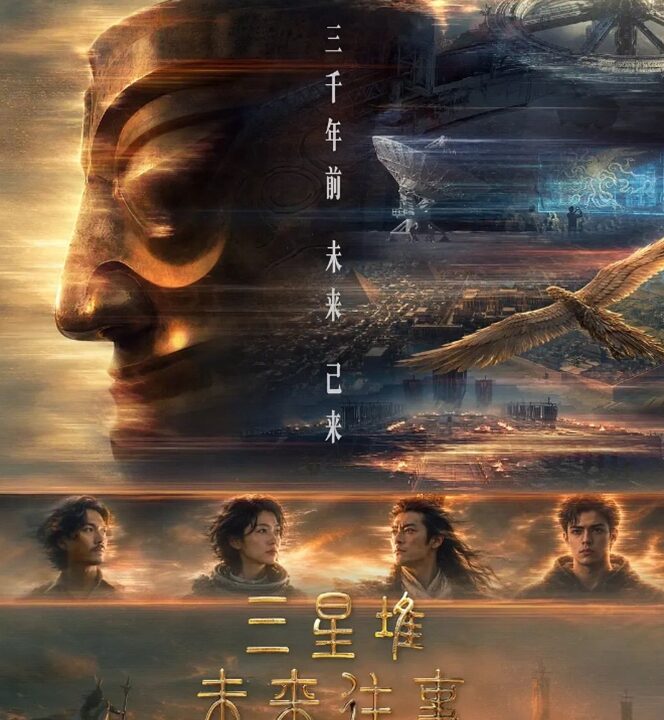
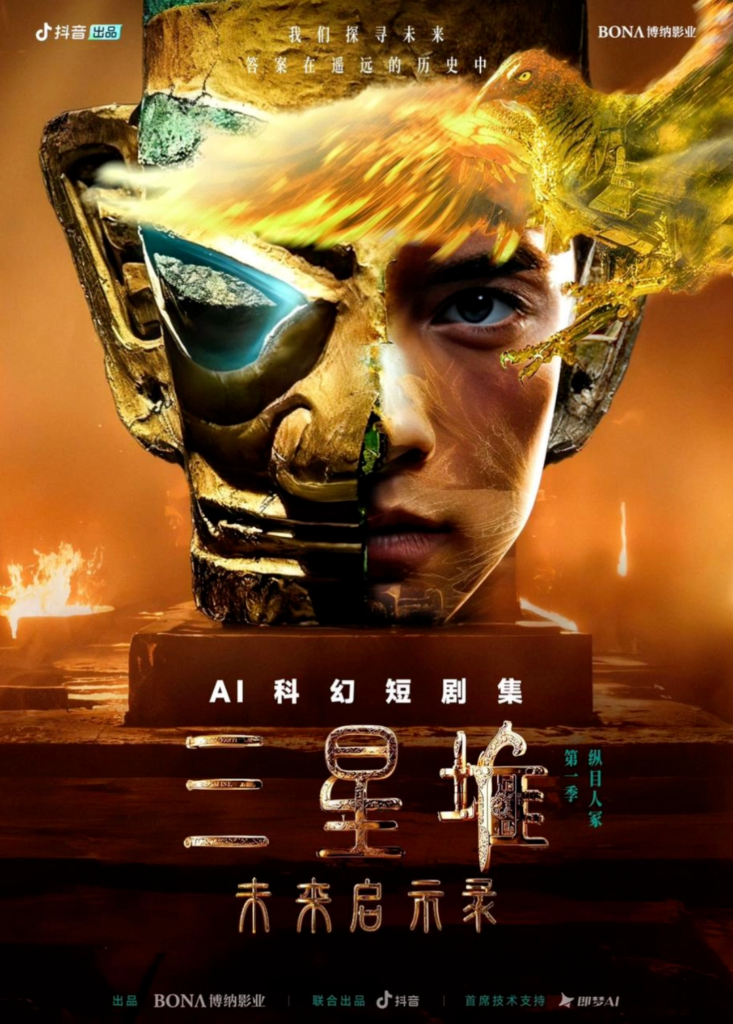
Today, 23 October 2026, a new kind of movie reaches Chinese cinemas. Sanxingdui: Future Past is being called China’s first feature film made with AI from start to finish. It is also facing a tough first day at the box office.
Let’s look at what the film is about, how it was made, and what it means for the future of movies.
What Is “Sanxingdui: Future Past”?
It is a roughly 100-minute sci-fi film(science-fiction film) from Bona Film Group, a major Chinese studio. According to TechNode, it is the country’s first “hyper-realistic” theatrical film (one that aims to look like real life) to use AI throughout production. It also has an official screening licence, so it can play in regular cinemas across China.
The story mixes ancient history with a near-future world. Mysterious symbols on ancient bronze objects hide a binary code (the 0s and 1s computers use) that should not have existed 3,000 years ago. In the future of the film, a super-smart AI spreads across the world. People hand over more and more decisions to algorithms (step-by-step rules that computers follow), and this leads to a global crisis.
So AI is both the tool that made the film and the subject of its story.
What Is Sanxingdui? A Quick History
The film borrows its name and imagery from a real place. Sanxingdui is a Bronze Age site in Guanghan, Sichuan, China. (The Bronze Age is the period when people made tools and art from bronze, a metal mix of copper and tin.) A farmer first stumbled on it in the 1920s. Big discoveries came in 1986, when two ceremonial pits held more than 1,000 items, including striking bronze masks.
What makes it famous is how strange the art looks. Archaeology magazine describes masks with large ears and bulging eyes, and some experts link them to a legendary king of the ancient Shu people. A bronze tree almost four metres tall is on display at the Sanxingdui Museum. The site is on UNESCO’s tentative list for World Heritage status, which means it is being considered for it.
The film brings these famous objects to life in a sci-fi setting.
How Was the Film Made?
This part is interesting, because making a long film with AI is much harder than making a short clip.
- Time and effort: Per TechNode, the film took two years. The team used over 1.2 million source images and went through more than 100 full versions of the film.
- People: AFP reports that nearly 100 people worked on it. The cost was over 10 million yuan, about $1.5 million.
- AI actors: Every actor, voice, and background is AI-generated. According to TechNode, the characters are original digital creations, not copies of real actors. That avoids legal trouble over using someone’s face or likeness.
- Humans still lead: The producers say the AI is not an “automatic director.” People still decide the story, the direction, and the final look.
The biggest challenge was consistency. An AI can make one beautiful shot, but a character’s face, clothes, or surroundings may change slightly in the next shot. In a short clip this hardly matters. Over 100 minutes it would be very noticeable. TechNode says the team adjusted details like micro-expressions (tiny, quick facial movements that show feeling) by hand, frame by frame. They aimed for cinema-grade quality: 4K (very sharp, high-resolution picture), HDR (richer light and colour), and surround sound.
The team also used a tool called Infinite Canvas, built by Boka Film Cloud. It keeps scripts, storyboards, characters, sets, and lighting in one shared workspace.
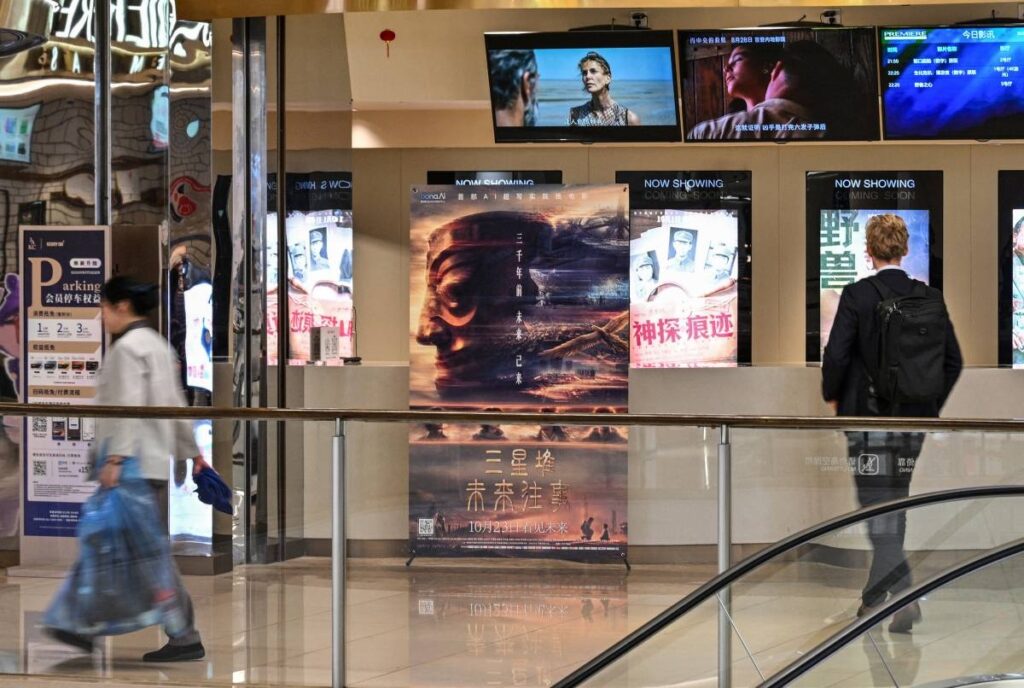
The Big Problem: Ticket Sales Are Weak
Now for the tougher news. According to AFP:
- More than 10,000 screenings were scheduled for opening day, per ticketing platform Maoyan.
- By Friday morning, presale revenue (money from tickets sold before the day) was only about 80,000 yuan, roughly $12,000.
- Maoyan forecast total box-office earnings (the total ticket money a film makes) to stay under 150,000 yuan. That is a small fraction of the film’s cost.
- Tickets cost between 20 and 90 yuan.
Bona’s CEO, Jiang Defu, admitted the response has been lukewarm. He still pointed out that the film is the first of its kind to get a theatrical release permit and face a paying audience.
Viewers seem unconvinced too. One person who saw a preview told AFP she would only pay if AI could match the cinema experience of Avatar. An independent AI director, Zhang Jun, said people will not buy tickets just because a film is AI-made. On Weibo (a popular Chinese social platform), one user said it might do well if it were free on streaming, but paying for it is a hard sell for now.
Why It Still Matters
Even if the box office is small, the film shows how far AI video has come. AFP notes that AI-generated short dramas on Douyin (China’s version of TikTok) earned more than 200 billion views in September alone. TechNode describes the path as moving from short demos to ads, then web series, and now full-length cinema.
The question has changed. It used to be “Can AI make a movie?” Now it is “Can AI become a normal part of how the film industry works?”
China is not alone in this. AFP says an AI-generated sci-fi film called Gods Don’t Give Gifts is planned for a US release on 4 December. A virtual actor named Tilly Norwood is also set to appear in a film called Misaligned. In Hollywood, many film workers worry about losing jobs to AI.
Final Thoughts
Sanxingdui: Future Past may not be a box-office hit on day one, but it is a real milestone. It proves a licensed, cinema-ready feature can be built mostly with AI, and it shows that the hard part is no longer making pretty images. The hard part is keeping a 100-minute story consistent, emotional, and worth paying for.
Whether audiences will pay to watch AI-made films is still an open question. We will find out over the coming weeks.
FAQ
Is Sanxingdui: Future Past really China’s first AI film?
Its producers and several news outlets call it China’s first AI-produced feature film to get a theatrical release permit. Many AI short videos and mini-series already exist in China.
When was it released?
23 October 2026, in cinemas across China.
Who made it?
Bona Film Group, using a team of about 100 people.
Does it use real actors?
No. All characters, voices, and backgrounds are AI-generated.
How much did it cost?
More than 10 million yuan, about $1.5 million.
Sources: