Every time you ask a chatbot a question, a computer somewhere does a huge amount of fast math. That math runs on electricity. Now multiply it by billions of people, every single day, and you get one of the biggest tech stories of 2026: AI electricity demand.
So how much electricity does AI really use? Will it make your power bill go up? And where will all that energy come from? This guide answers these questions in simple words, with the latest numbers from trusted sources.
The Quick Answer (In 30 Seconds)
- AI energy consumption is growing fast. The International Energy Agency (IEA, a global energy watchdog) says electricity use by data centers could more than double by 2030.
- One chat question uses very little power. The problem is the scale: billions of questions plus the huge cost of building (training) AI models.
- Your electricity bill may feel it, but it is not the only reason bills are rising. Old power grids and general inflation also play a part.
- Tech giants are racing to find power, including nuclear energy, natural gas, solar and wind.
Why Is AI So Hungry for Electricity?
To understand AI power consumption, you first need to know where AI lives.It lives in data centers. A data center is a very large building packed with computers that store information and run apps, websites and AI tools.
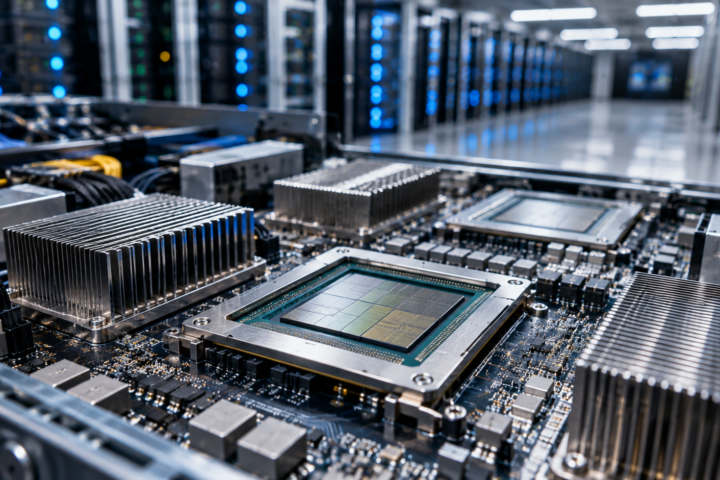
AI needs the strongest chips available. These are often GPUs (graphics processing units, powerful chips that can do thousands of calculations at once). Powerful chips use a lot of electricity and also get very hot, so data centers need heavy cooling too, which uses even more power.
There are two main jobs that burn energy:
- Training: teaching an AI model by feeding it enormous amounts of data. This can run for weeks or months.
- Inference: using the finished model to answer your questions. Each answer is small, but the total adds up because so many people use AI all day.
The IEA explains that a single AI-focused data center can use as much electricity as about 100,000 homes. The biggest ones now being built are expected to use around 20 times more than that (IEA, Energy and AI report).
The Big Numbers: How Much Electricity Does AI Use in 2026?
Let’s look at the data center electricity demand in plain numbers. A terawatt-hour (TWh) is a unit used to measure very large amounts of electricity over time, the kind countries use.
- 2024: data centers used roughly 415 TWh, which is about 1.5% of all the electricity used in the world (BusinessDay, summarizing the IEA).
- 2030: the IEA expects this to reach about 945 TWh. That is slightly more than the whole of Japan uses today (IEA).
- AI-focused data centers are expected to more than quadruple their power use by 2030 (Public Power).
- 2035: in its main forecast, the IEA sees around 1,200 TWh (IEA).
The growth is already visible. An April 2026 update from the IEA reports that data center electricity use jumped 17% in 2025, more than five times faster than the 3% growth in total global electricity demand. Tech companies also spent over $400 billion on AI infrastructure that year (W.Media).
Which Countries Use the Most?
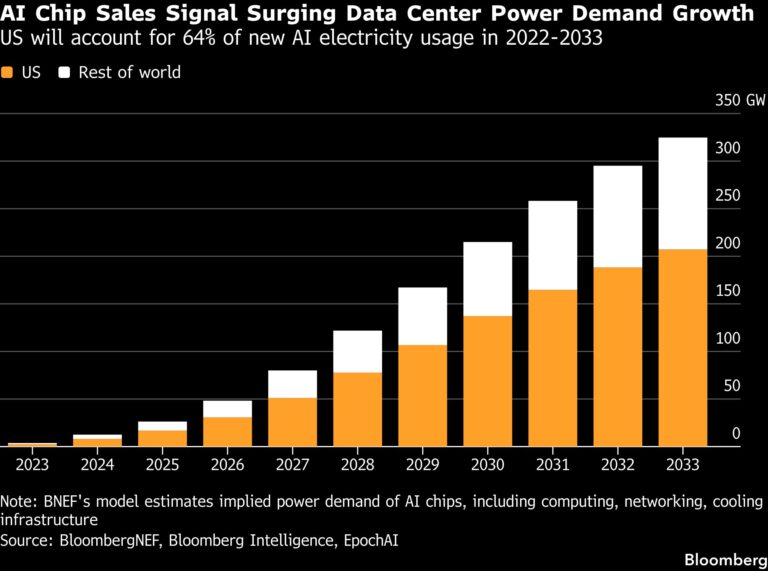
In 2024, the United States used about 45% of the world’s data center electricity. China used about 25% and Europe about 15% (IEA). In the US, data centers could account for nearly half of all electricity demand growth until 2030.
A Fair Reality Check
AI is not the only thing pushing power demand up. The IEA notes that data centers make up only about one-tenth of global electricity demand growth to 2030. Factory motors, home and office air conditioning, and electric cars each add more (IEA). The difference is that data centers are packed into a few places, so local grids feel the pressure much more. Nearly half of US data center capacity sits in just five regional clusters.
One ChatGPT Question vs. Millions of Them: AI Energy Use Per Query
A very common question is: how much energy does ChatGPT use per question?
The answer depends on who you ask, and it has changed over time:
- An older and much-quoted estimate said about 3 watt-hours per question.
- Research group Epoch AI later re-did the math with newer facts and found a typical question likely uses about 0.3 watt-hours, roughly ten times less. That is less than what an LED bulb or a laptop uses in a few minutes (Epoch AI).
- OpenAI’s CEO Sam Altman gave a similar figure of about 0.34 watt-hours, comparing it to an oven running for a little over one second. He also said each question uses roughly one-fifteenth of a teaspoon of water for cooling (report on Yahoo News).
So is AI energy use no big deal? Not quite. Epoch AI points out that longer questions, big uploaded documents and “thinking” style models can use far more power than a short chat. Feeding a very long document, for example, can cost many times more than a simple question (Epoch AI). Add the cost of training new models, and the total becomes huge even if each small question is cheap.

Will AI Data Centers Raise Your Electricity Bill?
This is the question many families are asking. The honest answer is: sometimes, and it depends on where you live.
Here is what the reports show:
- Power companies must build more. To serve data centers, utilities need new power plants, power lines and grid upgrades, and those costs can end up on customer bills (BGR, citing Consumer Reports).
- Some areas feel it more. In Maryland, households are estimated to pay an extra $168 to $216 a year, mainly because of growing data center demand. PJM, the company that runs the power grid across 13 US states, earlier estimated that rising capacity costs alone could add 1.5% to 5% to some household bills (Tom’s Guide).
- A worst-case study looks scary. One 2026 study warns that bills could rise as much as 57% by 2030 as utilities expand to serve data centers (ConsumerAffairs). Treat this as a high-end projection, not a sure outcome.
- But AI is not the only cause. Consumer Reports says inflation and an aging grid also push bills up. Households paid about 7.1% more for electricity in 2025 (BGR). A June 2026 fact-check also found that US home electricity prices rose about 42% over five years, and it examined a viral claim of a 267% jump near data centers (PolitiFact via WRAL).
What Are Governments Doing?
Leaders are starting to act. Some US states now make big data centers pay for most of the power capacity they reserve, even if they do not use all of it. Ohio did this in 2025 (Tom’s Guide). The White House has also expanded a voluntary pledge, joined by utilities, data center builders and governors, meant to protect households from higher bills (AP via WOKV). Florida’s governor signed a law meant to stop utilities from passing data center costs to homes and small businesses.
Where Will All This Power Come From?
The IEA expects a mix. Renewable energy (solar, wind and similar clean sources) could meet about half of the extra data center demand. Natural gas would add around 175 TWh, and nuclear about the same amount (IEA).
Why Big Tech Loves Nuclear Power
AI data centers need steady power all day and night. Nuclear plants can deliver that without producing carbon emissions while running. That is why the biggest AI companies are signing long nuclear deals:
- Meta signed 20-year contracts to buy power from three nuclear plants in Ohio and Pennsylvania, becoming one of the world’s biggest corporate buyers of nuclear energy (CoStar).
- Microsoft agreed in 2024 to a 20-year power deal that helps restart the Three Mile Island plant in Pennsylvania (same source).
- Amazon is working with Energy Northwest on small reactors in Washington state, and Google has its own small-reactor deal (WisdomTree).
Many of these use SMRs (small modular reactors, smaller nuclear reactors built in factory-made parts). The catch is timing. The IEA says the first SMRs should only start coming online around 2030, and data centers need power now (IEA). That gap is why gas plants are still part of the plan.
Is the Power Grid Ready for AI?
The power grid is the network of power plants, wires and substations that delivers electricity to your home. Right now it is under stress:
- Speed: US regulators agreed to let large energy users connect to the grid faster, to keep up with AI data centers (AP via WTOP).
- Size: data centers now use about 5% of US electricity, and that share could triple by 2035 (WSB-TV, citing the Electric Power Research Institute).
- Wear and tear: AI workloads make power demand jump up and down very quickly. Reports say these swings can strain batteries, backup generators and cooling systems, causing them to wear out early (Insurance Journal).
The Good News: AI Can Also Save Energy
IEA chief Fatih Birol has said AI is still an “energy taker” today, but it is also becoming an “energy maker.” It is helping drive new ideas such as next-generation nuclear reactors, flexible data centers and long-duration energy storage (W.Media). The IEA also says AI can make power companies more efficient, and that emissions saved by smart AI use could offset part of the extra emissions (TechMonitor). Whether that happens depends on how widely these tools are used.
What This Means for You
- Check your local rules. Bill impact depends on your state or utility. Look at how your power company plans to charge big data centers.
- Use AI with purpose. One short question is tiny. Heavy tasks like very long documents cost more, so use them when they truly help.
- Cut waste at home. Efficient bulbs, smart thermostats and appliances still help your bill more than skipping a chatbot question.
- Watch the debate. Expect more laws about who pays for the power AI uses.
Frequently Asked Questions
How much electricity does AI use?
Data centers used about 415 TWh in 2024 (around 1.5% of world electricity). The IEA expects around 945 TWh by 2030, with AI the main driver.
How much energy does one ChatGPT question use?
Estimates are around 0.3 to 0.34 watt-hours for a typical short question. Long or complex tasks can use much more.
Are AI data centers raising electricity bills?
In some regions, yes. Costs of new power plants and grid upgrades can reach customers. But aging grids and inflation also matter, so AI is one cause among several.
Which country uses the most data center electricity?
The United States, with about 45% of the global total in 2024, followed by China and Europe.
Can AI run on clean energy?
Partly. Renewables and nuclear are expected to supply a large share, but natural gas will also help meet near-term demand.
Final Thoughts
AI electricity demand is real, it is growing fast, and it is changing how the world plans its power supply. One chatbot reply costs almost nothing. But billions of replies, plus giant training runs, add up to a new kind of industrial power user. The big questions now are who pays, where the power comes from, and how clean it can be. Keep an eye on this topic. It will shape energy prices, climate goals and tech growth for years.