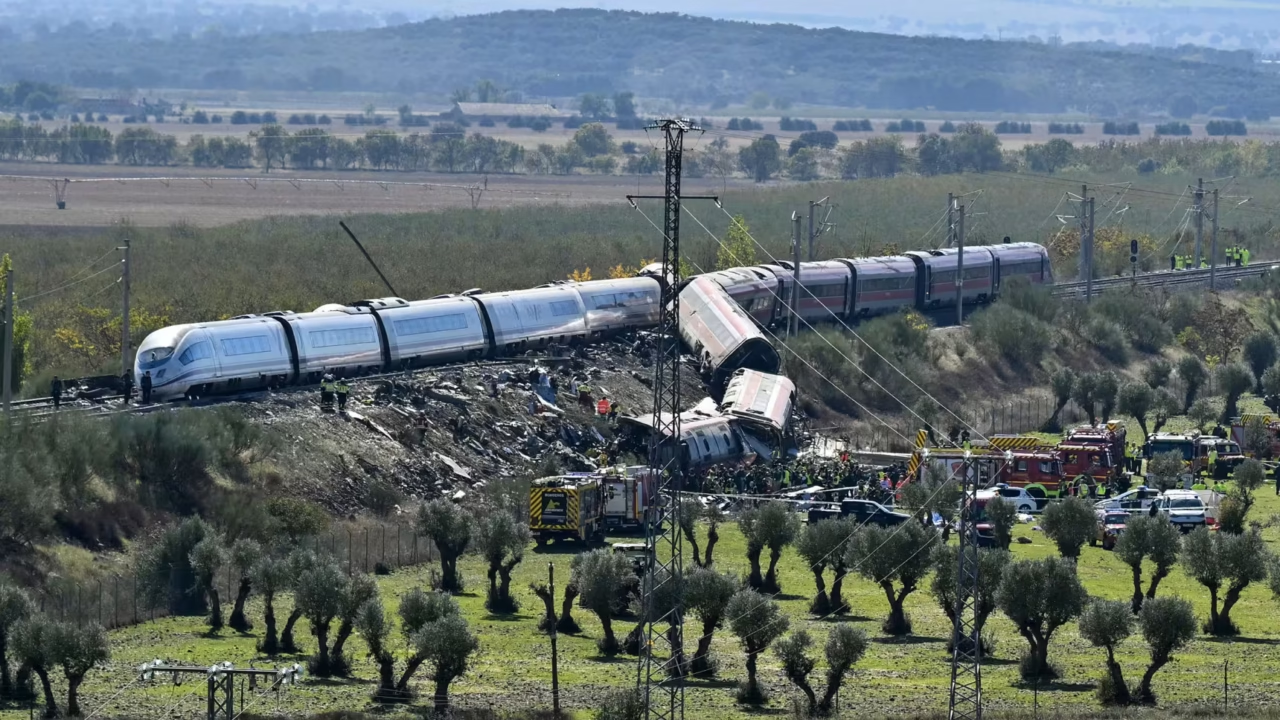
Spain is in mourning. On Wednesday morning, October 28, 2026, two high-speed trains collided in central Spain, and at least 69 people have died. It is one of the country’s worst rail disasters in years.
Here is a clear, simple summary of what happened, what officials say caused it, and what is happening now.
What happened in the Spain train crash?
The crash took place in Toledo province, about 150 km (93 miles) south of Madrid, according to ABC News. It happened on the Madrid–Seville high-speed line (a railway built for trains that run much faster than normal ones), between the towns of Urda and Los Yébenes.
A moving train from the state-owned company Renfe hit the back of a stopped train run by the private company Iryo. This kind of crash is called a rear-end collision. Euronews reported that the Renfe train had 397 passengers and the Iryo train had 147. Two carriages came off the rails, and the wreckage was scattered across a gravel slope, CBS News said.
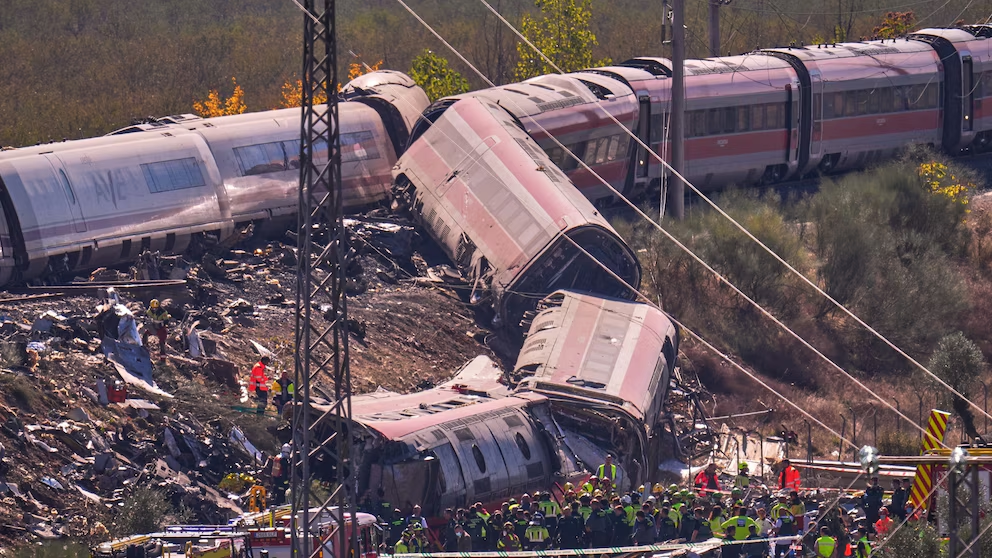
Latest updates on the death toll and injuries
- Deaths: At least 69 people have died, CNN reported on Thursday morning. Earlier reports said 68, and officials warn the number could still change.
- Injuries: More than 100 people were hurt. Of 110 injured people taken to hospital, 60 have already been released, according to the regional government’s latest update.
- Where they were: Regional leader Emiliano García-Page said 24 victims were on the Renfe train, and the rest were on the Iryo train, CNBC reported.
- Foreign nationals: Reuters, via CNN, reported that 42 foreign citizens from seven countries were involved. At least one died and seven were injured. CBC reported that several Canadians were hurt.
- Rescue work: More than 500 emergency workers, helicopters, and drones took part. On Thursday, Prime Minister Pedro Sánchez said teams were now focused on recovering the bodies so the victims can be identified.
- A police officer died: The Civil Guard (Spain’s national police force) said one of its own officers was killed in the crash.
What caused the crash?
Officials have not given a final answer, but they say two things went wrong.
First, a safety system failed. Transport Minister Óscar Puente said the control system near Urda broke down, so six trains were stopped on the line, CNBC reported.
Second, a human decision made it worse. Puente called a train controller’s order “inexplicable.” The controller allowed the Renfe train to restart even though a stop signal was still active. CBS News reported that the train then ran about 25 km before it hit the stopped Iryo train.
This is only the early picture. A full investigation is underway. Sánchez promised that any negligence (a failure to take proper care) will be dealt with “with the utmost firmness.” The rail union CSIF has asked Puente to resign, and also asked people to respect the presumption of innocence for ADIF’s head of traffic, CNN reported.
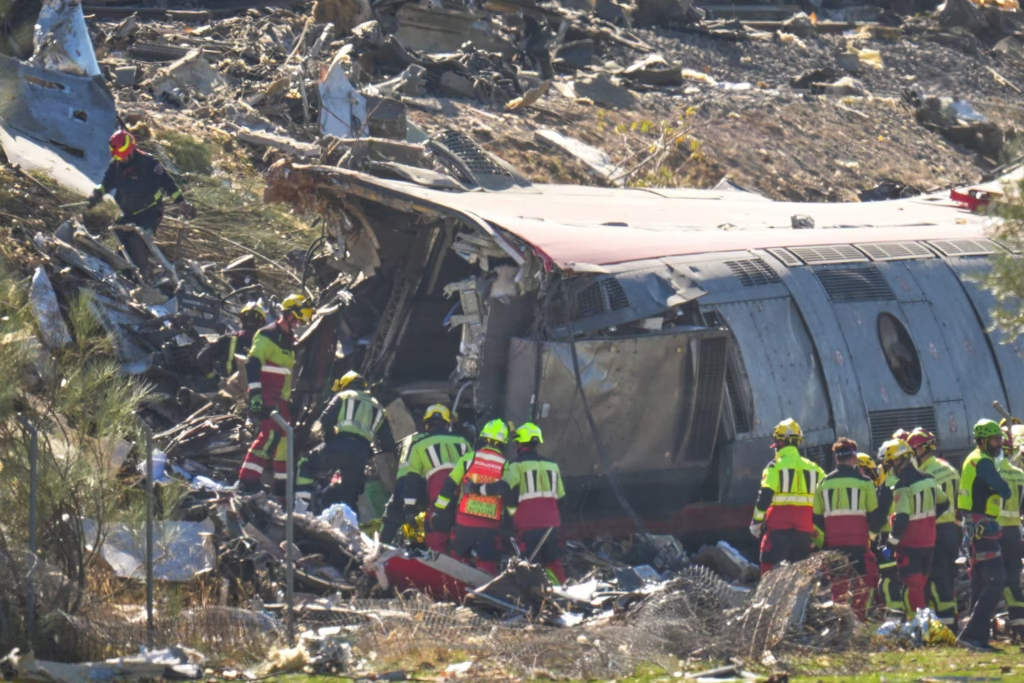
Identifying the victims
Little is known yet about who the victims were. The Civil Guard opened four offices in different Spanish cities to speed up identification. Families are being asked to give DNA samples, which helps match bodies to missing relatives when they are badly injured.
Spain declares three days of national mourning
The government announced three days of national mourning, from Thursday to Saturday, ABC News reported. National mourning is an official period when flags fly at half-mast and the country honors those who died. “Today all of Spain is grieving,” Sánchez said, according to NPR.
Why this crash has shaken Spain even more
This is the second deadly high-speed train crash in Spain in nine months, and it involved trains from the same two companies, as AP reported. In January, a crash near Adamuz in southern Spain killed 45 people, CBS News noted. Before that, Spain’s dedicated high-speed lines had never had a fatal crash since they opened in 1992. The only deadlier recent disaster was in 2013, when 80 people died near Santiago de Compostela.
Spain has one of the longest high-speed rail networks in Europe, and people there are proud of it. Two disasters in one year are now forcing hard questions about rail safety.
What happens next?
- The investigation into the control system failure and the controller’s order continues.
- The Madrid–Andalusia high-speed service has been disrupted, so check Renfe and Iryo before you travel.
- The death toll may still change as search and recovery work continues.
FAQs
How many people died in the Spain train crash?
At least 69, based on the latest reports on Thursday, October 29, 2026.
Where did the crash happen?
Near Urda, in Toledo province, on the Madrid–Seville high-speed line.
What caused it?
Officials point to a control system failure and an “inexplicable” order from a train controller. The full investigation is not finished.
Are Renfe and Iryo the same company?
No. Renfe is Spain’s state-owned operator, and Iryo is a private operator.