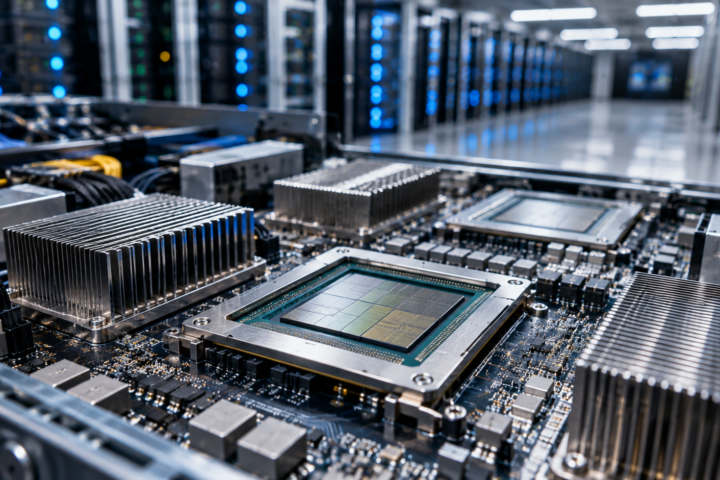
Modern AI depends on specialised chips housed in large data centres. Training a frontier model can occupy thousands of processors for weeks, and serving millions of users afterwards requires substantial computing capacity every day.
That infrastructure consumes electricity and, in many facilities, water for cooling. As demand grows, data-centre operators are competing for grid connections, land and long-term power contracts.
Efficiency is improving
Engineers are reducing costs through more efficient chips, smaller specialised models and techniques that let models answer questions with less computation. In many applications, a compact model tuned for one task performs as well as a much larger general one.
Why it matters beyond technology
The infrastructure boom affects energy planning, local communities and supply chains for semiconductors. Countries increasingly see computing capacity as strategic, similar to ports or power stations.
For companies adopting AI, the cost of computation is now a real line item. Choosing the right model size for each task has become as important as choosing the model itself.